Call us
Milling
Ball End Milling | |
Simulation | |
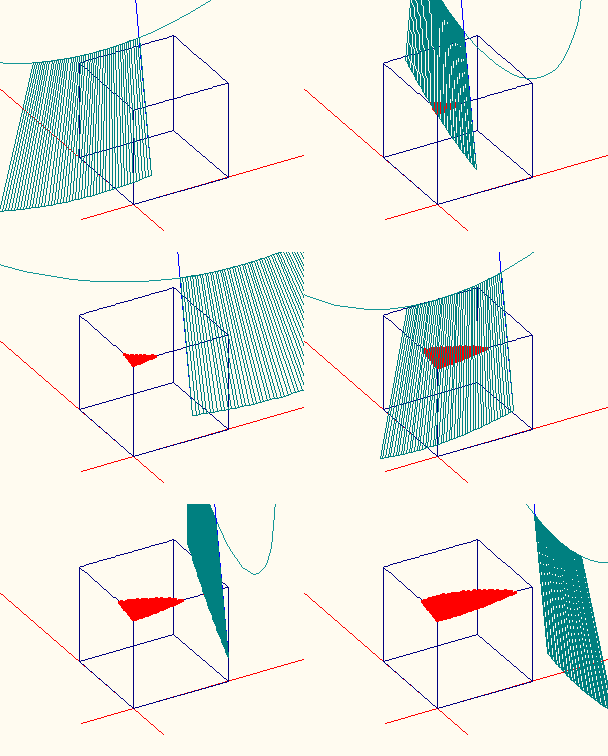
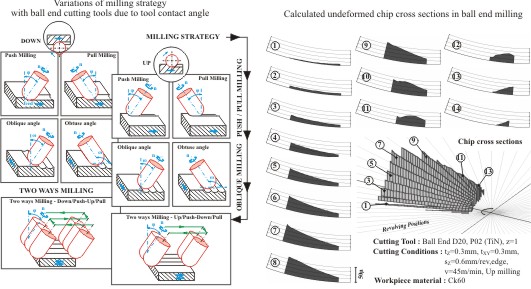
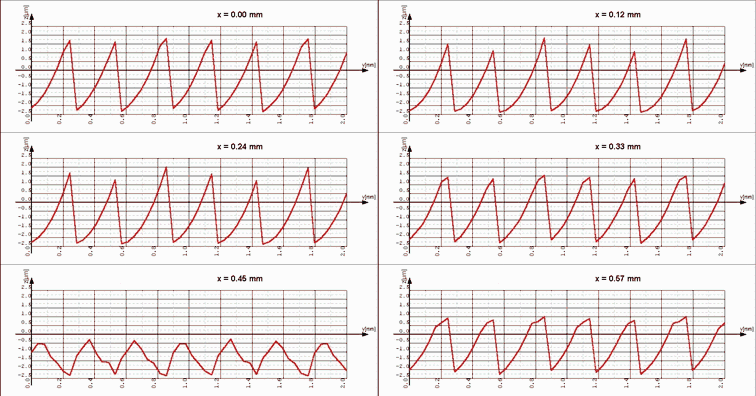
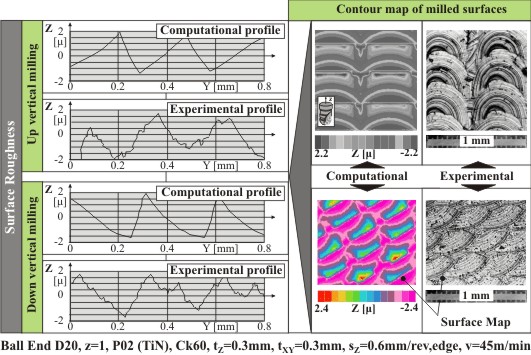
Milling is today the most competent, productive and flexible-manufacturing methods for complicated or sculptured surfaces. Ball end tools are today used by the manufacturing industry for the machining of 3D free-form surfaces for dies, molds, various parts, such as aerospace components, etc. Milling data, such as surface topomorphy, surface roughness, non-deformed chip dimensions, cutting force components and dynamic cutting behavior, are very helpful, especially if they can be computationally accurately produced by means of a simulation program. |
|
|
|
Surface topomorphy | |
|
|
Verification | |
|
|
|
|
Face Milling | |
Simulation | |
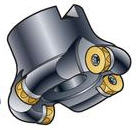
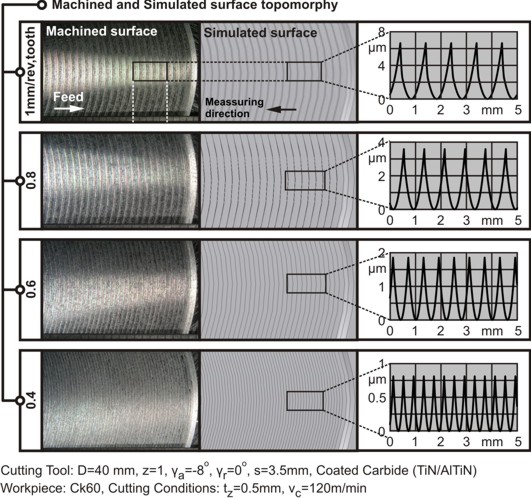
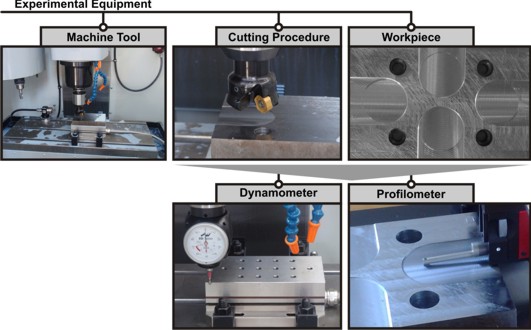
Face Milling is today the most effective and productive manufacturing method for roughing and finishing large surfaces of metallic parts. Milling data, such as surface topomorphy, surface roughness, non-deformed chip dimensions, cutting force components and dynamic cutting behaviour, are very helpful, especially if they can be accurately produced by means of a simulation program. This paper presents a novel simulation model which has been developed and embedded in a commercial CAD environment. The model simulates precisely the tool kinematics and considers the effect of the cutting geometry on the resulting roughness. The accuracy of the simulation model has been thoroughly verified, with the aid of a wide variety of cutting experiments. The proposed model has proved to be suitable for determining optimal cutting conditions for Face Milling. The software can be easily integrated into various CAD-CAM systems. |
|
|
|
Verification | |
|
|
|
|
| |